
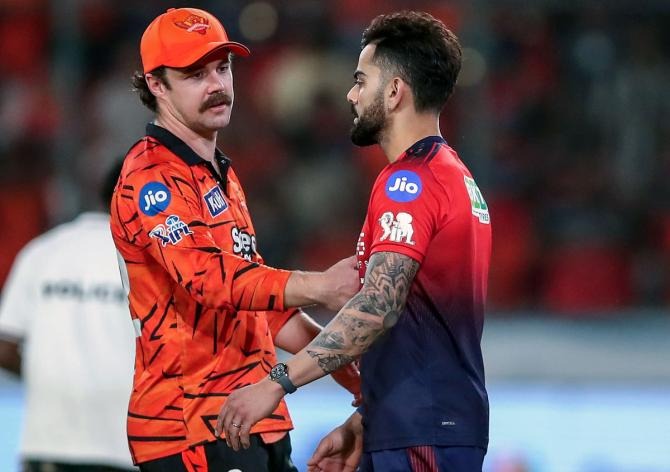
It wasn’t just another instance of fan rivalry going too far when Jessica Davies, the wife of Australian batter Travis Head, recently discussed the barrage of online hate hurled at her family following her husband’s on-field altercation with Virat Kohli.
Shreyas Iyer’s sister Shrestha’s distressed response following her violent targeting for participating in a humorous social media video with Punjab Kings’ content team wasn’t either.
These instances of “passionate fandom” going awry are not unique. They are signs of a poisonous ecosystem: during the past ten years, cricket’s ancillary business machinery has intentionally contributed to the development of an organized, profitable, and now uncontrollable hate industry.
Over time, aggressive social media marketing has transformed into Frankenstein’s monster.
“There are agencies that can charge anything between Rs 25,000 to Rs 2 lakh for spreading unmitigated hatred against a particular player. To run a campaign, customised stats could be given. Now it’s up to them to make the topic trend. Obviously, the rates will be different for hours of trending and trending for days,” PTI quoted an industry insider as saying.
Nearly ten years ago, the social media landscape surrounding cricketers underwent a significant shift as platforms evolved from being merely interaction tools to financial goldmines.
At a time when traditional advertising revenue through linear television started to decline, a player’s social media following increasingly impacted the value of his digital endorsement contract.
Endorsement deals worth crores could result from a single viral hashtag. At that point, the environment underwent a lasting transformation.
“And here entered a very important component. The sports management firms that handled players’ image and commercials. “The managers would comb through profiles of social media aggregators with decent following. They would be engaged to improve a player’s social media traction,” PTI quoted a senior BCCI official as saying.
Fan clubs quickly proliferated. Outrage over nuance, abuse over analysis, and tribal allegiance over understanding of sports were all rewarded by algorithms. What at first appeared to be innocuous fan interaction gradually turned into weaponized propaganda.
Inorganic amplification worked both ways, elevating one person while methodically undermining another, according to managers, agencies, and social media operators. The speed at which this ecology would escape institutional control was something that no one could have predicted. Bots turned into armies. Digital lynch mobs emerged from rival fan groups. Manufactured trends gained traction in public discourse.
Players were no longer the only ones subjected to abuse. Families ended up as collateral damage. In a society where hatred became currency and anonymity eliminated accountability, wives, sisters, and even children were easy targets.
Because cricket’s larger commercial ecosystem spent years encouraging online polarization without considering the final human cost, Jessica Head and Shrestha Iyer are currently suffering. The sad thing is that the same ecosystem that used to applaud “engagement metrics” is now appalled by the monster those figures produced.