
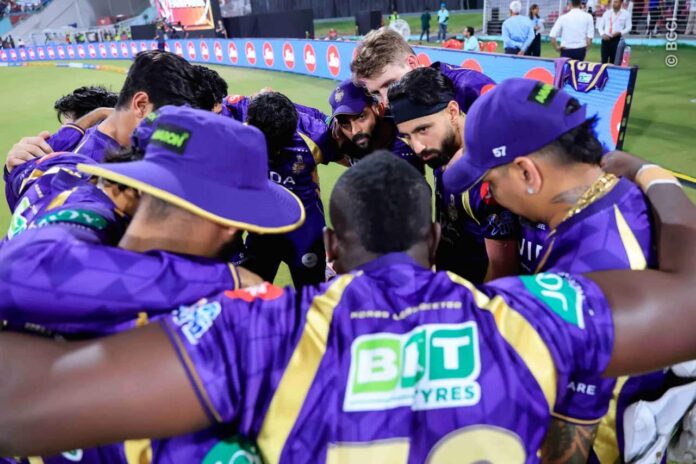
The T20 format was designed to make the game fast and getting it done with in three hours. But in the contrary the matches in the popular Indian Premier League are getting stretched to more than four hours. The captains of some of the franchises have already been penalised heavily for slow over-rates in this season so far, but it has had little effect on matches finishing on time.
The former India captain Sunil Gavaskar, who also does commentary during the IPL matches, has urged the BCCI to “take measures to get it even more crisper and tighter.” He also said during the strategic time out limited reserve players and support staff should be allowed in the playing area.
“Often, one sees the unnecessary sight of reserve players stepping onto the ground to give a bottle of water to the fielder near the boundary. That should not be allowed, as that would mean more than 11 players on the field while the play is on, even though it may be between deliveries. At the strategic time out too, one often sees about half a dozen others on the ground, including the batters who are next into bat. That is taking the liberty too far. Here again, apart from the two reserve players with the drinks and two from the coaching staff, and nobody else should be allowed on the ground,” Gavaskar wrote in his column for Mid-Day.
“As Richie Benaud said to me at the start of my broadcasting career, the ground is a sacred place and should be entered only by those officiating and those playing. This is the reason if, am not doing any pitch report or a TV show, I hardly step out on the field. Hopefully, the BCCI will also ensure that and all the committee members who have all access accreditation also do not step inside the boundary. Keep the sanctity of the playing area please. The IPL is a fantastic tournament, but a bit of looseness and laxity is coming in which is not cricket and if the ever-alert BCCI can take measures to get it even more crisper and tighter, it will be truly unbeatable and brilliantly spectacular as any event can ever be,” he added.
The former Indian great also suggested that the time allowed between wickets can be cut from two minutes to one. He pointed out that batters are already waiting in the dugout, so it doesn’t take much time for the next player to walk in after a dismissal.
“Today all batters are in the dug-out instead of being in their change room as in the past, so the allowance of two minutes can be brought down to a minute and if the batter is not ready to face the bowler, then after a couple of warnings to the team, the penalty runs should kick in,” wrote Gavaskar.
“Similarly, the first ball after the strategic time-out should be bowled exactly after two minutes and 30 seconds have passed. Here also, the actual time taken at the end of the over, and then the umpire signalling time out, means the break is for almost three minutes. Yes, it’s peak summer, so the players need to cool down and get some refreshing drinks, but this is being exploited, and the time out can stretch unnecessarily. Again, a penalty of runs will make a huge difference,” he added.
Gavaskar feels financial penalties are not making any difference because they do not affect the result of the game. He suggested for a points or runs penalty to be imposed to get the job done in time.
“Today, with the amount of money that is on offer, a financial penalty is nothing for the teams who usually take care of the individual player’s financial penalty too. Unless the penalty is such that it can affect the result of the game, it won’t be effective,” wrote Gavaskar.
“See the panic that happens when a team is penalised for not bowling its overs in time and is allowed one player less outside the 30-metre ring for the final over. That’s because it can affect the result of the game. A points or runs penalty will ensure that there is no dawdling between the overs,” he added.