
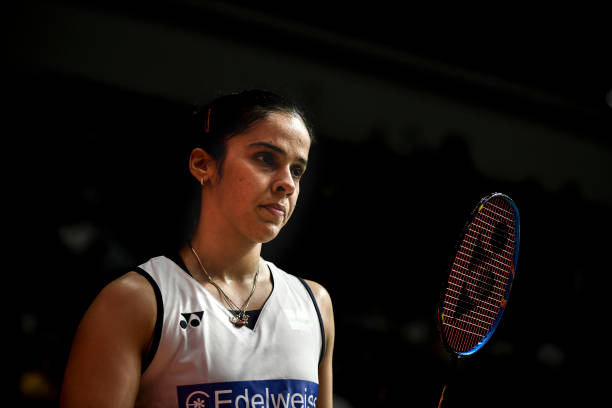
Saina Nehwal said that the Badminton World Federation (BWF) should tread carefully regarding proposed scoring changes, and the Olympic medallist thinks the current 21-point system maintains badminton’s required intensity and endurance.
BWF has proposed switching to a 3×15 scoring format from the current 3×21 system, which would require a membership vote scheduled at the BWF Annual General Meeting in Horsens, Denmark on April 25.
“Badminton has a rich tradition and tournaments like the All England Open Badminton Championships and the BWF World Championships have always been special because of their intensity and endurance factor,” Saina told PTI in an interview.
“Any change in scoring or format should be carefully considered. The current 21-point system has worked well and players have adapted to it over many years.
“If changes are introduced, they should ensure that the quality of rallies and the competitive balance of the sport are not affected. At the end of the day, the focus should remain on fair competition and the spirit of the game.”
Under the revamped BWF World Tour structure, the five Super 1000 tournaments to be held across Asia and Europe will feature a new format in singles. Instead of the traditional straight knockout system, 48 players will first compete in a group stage before moving into the knockout rounds.
The doubles events will continue with a 32-pair knockout draw. Each Super 1000 tournament will run for 11 days and will be played across two weekends.
Meanwhile, Saina believes the BWF needs to place greater focus on player welfare. She said the packed international calendar gives players very little time to recover, which increases the chances of injuries and burnout among top shuttlers.
“Badminton is always a very tough sport both physically and mentally. The rallies are longer, the speed of the game is higher, and players are competing in tournaments almost every week.
“The Badminton World Federation has tried to structure the calendar, but from a player’s perspective, recovery time is extremely important. Injuries and fatigue can affect performance and also shorten careers.
“I feel the schedule should allow better recovery periods between major tournaments, and teams should have more support for sports science and rehabilitation.”
Lakshya Sen came close to lifting the All England Open title last week but had to settle for second place after losing to Chinese Taipei’s Lin Chun-Yi in the men’s singles final. It was another narrow miss for the Indian shuttler, who had also finished runner-up at the prestigious tournament back in 2022.
Commending Lakshya’s ability to deliver strong performances in major events, Saina said: “First of all, reaching the final of All England Open Badminton Championships twice is a big achievement. It’s one of the most prestigious tournaments in badminton and the level there is always extremely high.
“Consistency at that stage shows that Lakshya is doing many things right. Sometimes in sport, the difference between winning and finishing runner-up is just a few points or moments of composure. If a player keeps reaching those stages, it usually means the title is not far away.
“So I would say it’s a very positive sign. It shows he has the ability and the mindset to compete with the best in the world,” added the 2015 All England runner-up.
The 35-year-old is also impressed with the performance of young Indian shuttlers but said physical strength, match temperament and tactical awareness remains key to consistency.
“Consistency at the top level comes from fitness, discipline and mental toughness over many years. Players need to maintain their level across the entire season, not just in a few tournaments,” said the former world No. 1.
“When PV Sindhu and I were competing regularly, the focus was always on preparation, recovery and staying hungry to improve.
“For the current generation, the key is to keep improving their physical strength, match temperament and tactical awareness so they can perform consistently in the biggest tournaments,” Saina explained.