
2025 was a year of “glorious uncertainties” for the nation’s favorite sport, Indian men’s cricket, as its white-ball peaks were eclipsed by the terrible low of a home Test series whitewash, while the women’s team matured with a long-awaited World Cup championship.
While the women won their first 50-over World Cup, the men’s team won the Champions Trophy (ODI) and the Asia Cup (T20). However, India’s weaknesses in the red-ball format under fierce head coach Gautam Gambhir—who was his typical aggressive self in both win and disaster—were exposed by a 0-2 thrashing at the hands of South Africa in Tests.
When the rest of the year was mostly filled with sparkles, why is it vital to focus on a single glitch? To identify the answer, a look back at the 2024–2025 Border-Gavaskar Trophy is crucial.
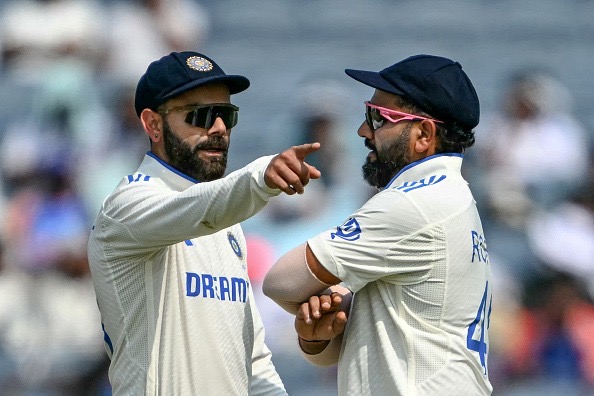
Virat Kohli and Rohit Sharma’s Test careers came to an end with the 1-3 series loss, and India had already lost R Ashwin to retirement halfway through the tour in Australia late last year.
Even though Rohit and Kohli demonstrated that they are here to stay by participating in domestic matches as required by the BCCI, their ODI futures remained a topic of discussion throughout the year.
Cheteshwar Pujara, another Test mainstay, also officially retired from international cricket, creating a huge void in the middle order that is currently having trouble finding a solid anchor.
India’s performance in the new World Test Championship (WTC) cycle (2025–2027) has been, at best, inconsistent. They built their team around new skipper Shubman Gill and a number of up-and-coming players and they had a bright start.
Gill led from the front as a relatively youthful India team drew the five-match away series against England 2-2. After Don Bradman’s 810 in the 1936–37 Ashes, he had the second-highest run total for a captain, with 754 runs at an average of 75.40 with four hundreds. Riding on the first wave, India easily defeated the West Indies at home (2-0), and it appeared that they had quietly accepted a new age.
However, in the longest format, luck can change drastically.
Simon Harmer, a cunning off-spinner from South Africa, ruthlessly severed the chord of India’s hopeful chandelier. After a 25-year quest to win a Test series against India, Temba Bavuma’s Proteas were more prepared and more composed.
Furthermore, it didn’t seem like a singular act. The Indians had surrendered in a similar manner against New Zealand spinners at home the previous year. A clear weakness in the armor against spin was shown by the twin failure.
Some of the best spinners in cricket history had to return from these shores with wounded egos and statistics, which was a bitter departure from the past. However, even a set of above-average spinners could now outwit the Indian hitters, since the Indians were unable to reach even a meagre target of 124.
With difficult travels to Sri Lanka and New Zealand scheduled for 2026, India is already down to sixth place in the WTC points standings, making a final place in the cycle seem like a very long way off. The next 12 months could also be devastating in the conventional format if India does not think strategically about players and combinations now.
However, the other side of the revolving door leading to the more glamorous realm of white ball cricket continued to be extremely glossy.
India demonstrated their dominance in ODIs and T20Is, at least in this region of the world, by winning both the ICC Champions Trophy in Dubai and the Asia Cup at the same venue.
After a dismal run in Test cricket, those victories also offered Gambhir some negotiating leeway.
With both men’s and women’s teams preparing for T20 World Cups, fans will have enough to look forward to in 2026 if the results of 2025 can be used as a benchmark.
The year was, in a sense, dedicated to female cricket players. To set the tone for the remainder of the year, the Under-19 team defended their T20 title in February. In international competitions, the women’s senior team has consistently lost to Australia, New Zealand, and England despite their apparent skill.
However, in this 50-over World Cup, India, led by Harmanpreet Kaur, defeated Australia and New Zealand before defeating South Africa in the championship match to win their first ICC title. The historic triumph has already resulted in an increase in domestic match fees by the BCCI and new player endorsements, which are unmistakable signs of an even better future for women’s cricket, which previously battled for funding and attention.
It was a year of transformation off the field as well. Along with a few new names, former Delhi cricket player Mithun Manhas took Roger Binny’s place as BCCI president. A few former cricketers, including Sourav Ganguly and Venkatesh Prasad, returned to administration positions in a number of other state associations.
Following the terror assault in Pahalgam and a brief military action, the already unstable diplomatic relations with Pakistan simply collapsed. The cricket pitch was also affected by the disturbance.
During the Asia Cup, Indian cricket players declined to shake hands with their international rivals at the BCCI’s directive. Additionally, they refused to accept the winners’ trophy since Mohsin Naqvi, a Pakistani, was supposed to deliver it.
Naqvi, the head of the Pakistan Cricket Board and the Asian Cricket Council in addition to being his nation’s minister of interior affairs, has so locked away the trophy at the ACC office in Dubai. Additionally, he has stated that he would only present it to the Indians at a ceremony that would be covered by the media.
In 2025, Royal Challengers Bengaluru finally won an IPL trophy after an 18-year wait. However, this momentous victory quickly turned tragic when a stampede at the M Chinnaswamy Stadium claimed the lives of 11 supporters and injured 56 more during the team’s festivities. Since then, Chinnaswamy has not hosted a significant game.
The majority of the blame for the catastrophe has been placed on the RCB team management, who encouraged large crowds of fans to attend the festivities despite lacking the necessary security clearances.
The entire incident highlighted the inadequate amenities for spectators at Indian venues as well as the need for improved crowd control.