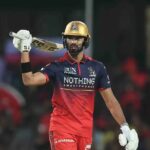
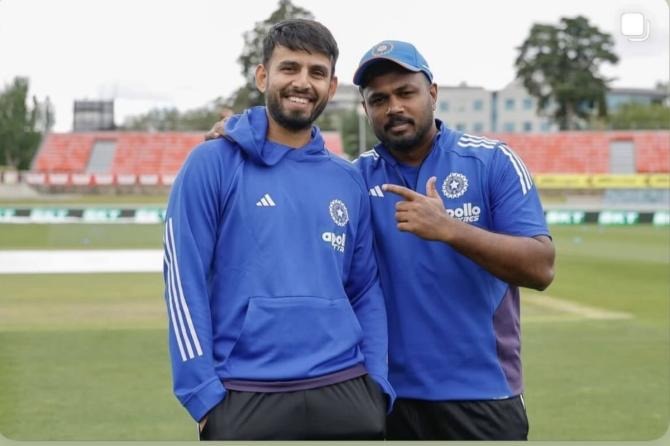
Jitesh Sharma’s selection over fellow wicketkeeper batter Sanju Samson in the series opener against South Africa gave adequate insight into the team management’s mindset heading into the World Cup at home, even though starting him in the previous three Twenty20 matches in Australia felt like an experiment.
Samson, who was unjustly moved to the top of the order following Shubman Gill’s return to the shortest format, cannot be held accountable for the think tank’s preference for a specialist lower-ranking finisher. Since then, he has had difficulty making the eleven.
Unless he performs poorly in the previous series against South Africa and New Zealand, Jitesh, who refers to his finisher’s job in the team as bread and butter, is anticipated to start for India in the T20 World Cup.
For the squad’s wicket-keeping possibilities, it is also challenging to look past Samson and Jitesh at this point. And in this situation, do the selectors need to think creatively?
“It is the right call. If Sanju is not in top three and if the keeper is batting in the middle order you rather play a specialist, a lower order batter than a top order batter. It is not easy batting for two balls or four balls. Jitesh is a specialist in that regard,” a PTI report quoted former India wicket-keeper Deep Dasgupta as saying.
“Nine games to go (before World Cup), I don’t see too many changes ahead of the T20 World Cup,” he reckoned.
“He (Sanju) is a great player. If you have to compete against him and play shoulder to shoulder, then I have to bring my A-game. I think we both are trying to play for India, not for other teams,” the 32-year-old Jitesh said after the first T20I against South Africa.
For the record, Sanju finished last year as India’s leading T20I run-getter with 436 runs including three centuries.