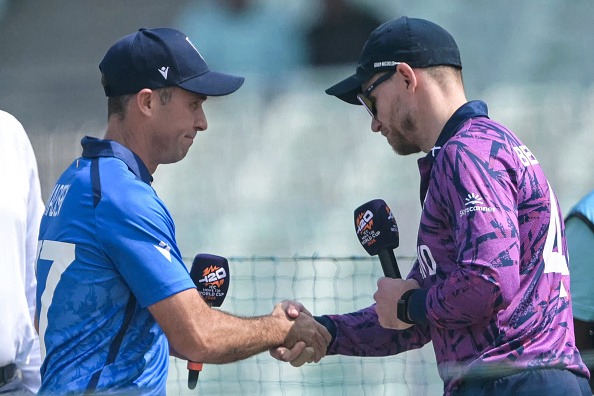
The Twenty20 World Cup, which got off to a rough start and finished in a home victory for white-ball giants India on Sunday, was highlighted by the valiant performances of cricket’s second-tier nations.
The International Cricket Council (ICC) had to put forth extra effort to preserve the 20-team competition from collapsing due to Bangladesh and Pakistan dramatics because of India.
Bangladesh’s proposal to play matches in Sri Lanka, which would have been a logistical headache for the organizers, was rejected along with their reluctance to travel to India due to safety concerns.
Bangladesh were replaced in the tournament by Scotland, but Pakistan shocked everyone by threatening to boycott their Group A match against India in support of Bangladesh.
India easily won the tournament’s most profitable match in terms of television income thanks to hectic behind-the-scenes talks.
Even though geopolitics tends to overshadow cricket every time the bitter rivals play, the ICC has come under fire for purposefully scheduling India-Pakistan matches in key tournaments to maximize their commercial appeal.
To the dismay of the supporters, Pakistan played all of their games in Sri Lanka, therefore it was unclear where the semi-final would take place. However, they ultimately failed to advance to the final four.
India’s defeat by South Africa shocked them out of any complacency, and in the tournament’s final stretch, opener Sanju Samson scored three consecutive 80-plus match-winning knocks to set up their triumphant campaign.
India became the first team to win three men’s T20 World Cup titles, the first to successfully defend the title, and the first to do it at home.
Few anticipated the associate nations to light up the competition despite the disparity in resources between them and cricket’s powerhouses, even though India’s victory was hardly surprising.
The Netherlands almost defeated Pakistan, the United States scared India, and Nepal and Italy pushed England all the way.
Afghanistan, who advanced to the round of four in 2024, fared poorly but played in the tournament’s tightest match, which South Africa won in a double Super Over.
Zimbabwe defeated heavyweights Australia and co-hosts Sri Lanka and entered the Super Eights unbeaten and as Group B toppers.