
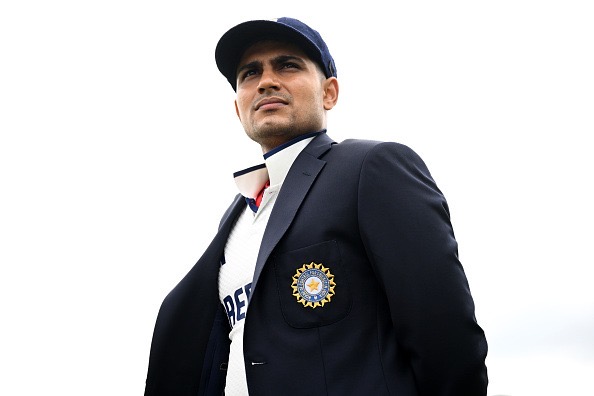
Shubman Gill, who was named India’s ODI captain last week after being given the Test captaincy prior to the England tour, would need to be prepared for the “ups and downs” of the position, according to former New Zealand skipper Kane Williamson.
“Leadership demands a lot of energy and clear focus on where you dedicate your time, not just as captain but in the various roles that come with leadership,” Williamson told the media during the CEAT Cricket Awards in Mumbai on Tuesday.
“Naturally, you can’t take on everything indefinitely; there’s a timeframe for doing the job before passing the baton. I experienced that with New Zealand, whether over five or ten years, people take on that responsibility and then it’s about transition and the next phase.”
“Shubman has excellent leadership qualities, and I’m sure he’s eager to contribute and make a big impact on Indian cricket.”
“We witnessed an impressive Test series in England at the start of his captaincy, which was a huge challenge with a young team in tough conditions.
“Naturally, a young star with strong leadership traits will take on more responsibility, and this is a great time for him. He’ll enjoy it, but like all leadership roles, it comes with ups and downs – that’s part of the job,” Williamson added.
Mohammed Siraj stands out from the others due to his dedication to putting the team first, and Williamson noted that the bowler has shown great leadership qualities.
Even as Jasprit Bumrah’s workload management is still a major topic of debate, Siraj has been leading the pace attack.
Siraj was instrumental in India’s 2-2 draw in the Test series in England earlier this year. He grabbed a four wickets in the first innings of the Ahmedabad Test, which helped India defeat the West Indies by an innings and 140 runs.
“I got to know him early in his career before he represented India, observing his talent as a young cricketer for Sunrisers in the IPL,” Williamson said.
“What sets him apart is his relentless commitment to putting the team first and his desire to take the ball, even when the game might not be moving. He always wants to be the player who changes the game by bowling long spells, and this attitude is contagious within the team, demonstrating strong leadership qualities.”
Williamson likened Siraj to veteran New Zealand bowler Neil Wagner, who challenged all of the best batsmen in their heyday and remained a Kiwi workhorse, particularly in Test cricket.
“In New Zealand, we had a similar presence in Neil Wagner, who would always take on challenges without backing down and could steady the team’s nerves. Mohammed Siraj embodies that spirit,” Williamson said.
Williamson, who guided New Zealand to victory in the first-ever 2019–21 cycle of the World Test Championship, stated that the traditional format of the game must be maintained and should not be limited to the Big Three of England, Australia, and India playing against one another.
“If only three teams are playing the format, it will struggle to survive. While we enjoy watching those series, they don’t fully support Test cricket’s growth,” Williamson said.
“It’s a major challenge, with numerous conversations ongoing to find solutions if sustaining the format is the goal. Meanwhile, the game is under strain in many countries.”
“There’s been a lot of discussion about the Test game and how to keep breathing life into it, especially in countries where it’s facing greater challenges,” he added.
Williamson stated that it is imperative that all participating nations unite and find a solution, regardless of the debates around a possible two-tier Test cricket system.
“The concern with a potential two-tier system is how teams in the second tier can continue to improve and work their way up to the top division,” he said.
“The Test format needs greater importance placed on it by all playing nations, along with additional resources to support its growth. As a passionate supporter of Test cricket, I would love to see it thrive,” he said.
According to the former New Zealand captain, he has a “casual contract” with New Zealand Cricket as a result of changing circumstances in his life.
“My life situation, like everyone’s, changes over time. With a young family, my decisions aren’t solely about cricket – they involve much broader considerations. These decisions are made in close consultation with New Zealand Cricket. It’s not about having a fixed long-term plan but working together and addressing challenges as they arise,” he said.
“Life is like that you make decisions based on your priorities, and others also make choices that can impact your career. These situations will always arise, and being part of those conversations, even if sometimes frustrating, shows you’ve been involved in the game for a significant time, which is a privilege,” he added.