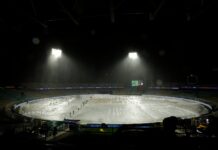
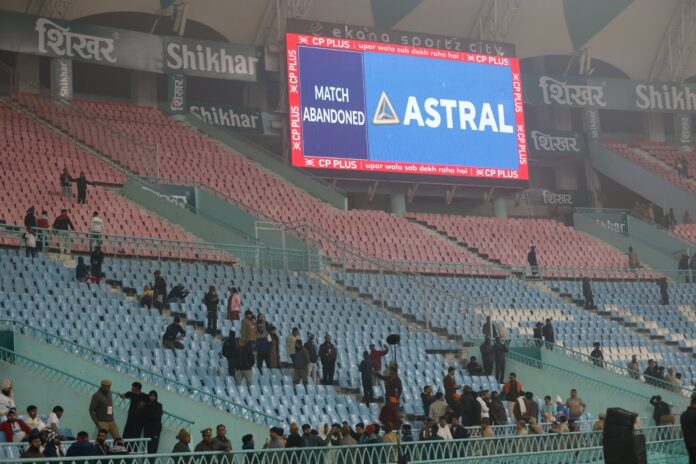
Due to poor sight caused by a thick layer of smog engulfing the Ekana Stadium, the fourth Twenty20 International between South Africa and India was called off without a ball being bowled on Wednesday. This raises major concerns about the BCCI’s decision to schedule matches in northern India during the peak winter month.
New Chandigarh, Dharamsala, Lucknow, Ranchi, Raipur, Visakhapatnam, Cuttack, Ahmedabad, Guwahati, and Kolkata were the venues designated for the entire series against the Proteas in November and December.
Additionally, pollution levels in host cities like Lucknow, New Chandigarh, and Dharamsala are typically at their highest during this time.
Despite multiple pitch inspections at the Ekana Stadium, the toss, which was supposed to happen at 6:30 p.m. local time, never happened. At 9:30 p.m., the umpires finally called off the game.
India, the T20 world champions, are leading the five-match series 2-1 going into Friday’s final game in Ahmedabad. The series is a prelude to the T20 World Cup, which will begin in India and Sri Lanka in February.
The game “has been abandoned due to excessive fog, making playing conditions unsafe” according to a statement.
India all-rounder Hardik Pandya was spotted donning a mask to spark internet conversations on the rising pollution levels.
According to monitoring organization IQAir, levels of cancer-causing PM 2.5 microparticles reached 78 micrograms per cubic meter in some areas of Lucknow, which is more than five times the daily maximum advised by the World Health Organization.
However, pollution levels in northern India have recently been shown to be significantly worse, particularly in Delhi, the country’s capital, where PM 2.5 microparticles increased to more than 20 times the WHO levels during football star Lionel Messi’s visit on Monday.
Parts of northern India are covered in acrid smog, which is caused by a lethal mixture of emissions from factories, burning crops, and heavy traffic when cooler air traps pollution near the ground.
While disgruntled spectators left the stadium, players completed their workouts on the ground before going inside for the majority of the inspections.