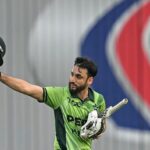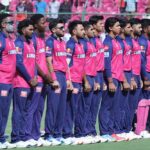

Australia won the last Test match at Sydney on Thursday by five wickets, securing a crushing 4-1 Ashes triumph over England.
With their aggressive “Bazball” strategy, England traveled to Australia with sincere expectations of winning their first Ashes series away from home since 2010–11. However, it swiftly fell apart in the face of consistently strong Australian bowling and on treacherous batting pitches.
With devastating eight-wicket losses in Perth and Brisbane, they fell behind 0-2 after just six days of cricket, and coach Brendon McCullum and captain Ben Stokes were called out.
The gung-ho approach was “all becoming a bit too predictable,” said to former England captain Michael Vaughan, and longtime BBC broadcaster Jonathan Agnew proclaimed “Bazball is dead.”
The Bazball style of offensive cricket seemed to have faded as Stokes defied Australia for over four hours in the first innings of the third Test, hitting his slowest-ever fifty.
Stokes is most likely safe, but McCullum departs Australia with severe concerns over whether he should remain in his position.
Rob Key, the head of cricket, will also have to deal with the fallout from a tour tainted by accusations that England lacked discipline and were ill-prepared, with a mid-series beach break and drinking session drawing harsh criticism.
Stokes has cautioned against making hurried decisions and urged England managers to have faith in New Zealander McCullum.
“I can’t see there being someone else who I could take this team (with) from where we are now to even bigger heights. We’re both pretty keen on carrying on doing what we are doing,” a AFP report quoted McCullum as saying.
Australia discovered another long-standing opener after losing the first one. In the first Test at Perth, Travis Head was elevated from five and hit a quick, game-winning 123 after Usman Khawaja experienced back spasms.
For the remainder of the series, he remained at the top of the order, scoring more daring hundreds in Adelaide and Sydney, seemingly solidifying his position.
The 39-year-old Khawaja successfully replaced the injured Steve Smith at number four in the third Test, but after his 88th Test in Sydney, he declared his retirement.
More than two years after David Warner’s retirement, selectors are still looking for a stable top two, as Head’s opening partner Jake Weatherald failed to fire.
Throughout the series, Australia’s superior bowling depth was evident, as even a weakened attack was able to subdue England.
Injured Josh Hazlewood was completely absent, captain Pat Cummins could only wear the Baggy Green in Adelaide, and regular backup Sean Abbott was also missing.
With Brendan Doggett, Michael Neser, and Jhye Richardson all contributing, it was left to the dependable Mitchell Starc, who was skillfully assisted by Scott Boland throughout.
Stokes acknowledged that Australia’s attack outplayed them and attributed the series outcome to their “amazing execution” with the ball.
“There’s a big difference between what Australia have been able to do with the ball compared to what we’ve been able to,” he said. “We own that.”
Veterans Joe Root and Steve Smith once again proved why they are in a class of their own. Under intense pressure to finally get the monkey off his back, Root scored his first century on Australian soil and then added another.
While hammering his own ton, Smith skillfully led Australia in four of the five Test matches.
With 286 Tests and over 24,000 runs between them, milestones fell once more.
With only Jacques Kallis (45) and Sachin Tendulkar (51) ahead of him, Root joined Ricky Ponting on 41 Test hundreds, while Smith’s 13th Ashes century was more than anyone other than Donald Bradman.
Smith, 36, has not indicated that he is prepared to call it quits, but Root, 35, intimated in Sydney that he would return for another tour in 2029.