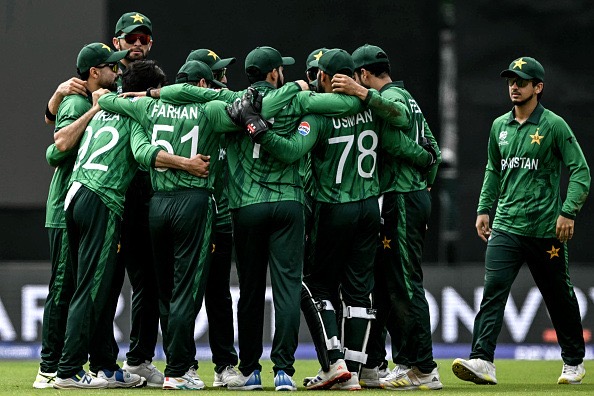
After the Pakistan Cricket Board (PCB) attempted to skirt the issue by placing the blame on its government, the International Cricket Council (ICC) has asked Pakistan to explain how the “Force Majeure” clause can be used to defend the team’s decision to skip the T20 World Cup match against India.
However, there is now some hope because the PCB has asked the ICC to hold discussions, according to an ICC Director who believes that the highly anticipated India vs Pakistan match scheduled for February 15 will eventually happen.
“The talks have started,” PTI quoted the ICC Director as saying.
The PCB has been asked by the ICC to defend skipping one game while continuing to play the others per the government’s directives.
In a formal letter to the ICC a few days before, the PCB stated that it wanted to apply the “Force Majeure” clause, citing the government’s tweet that prohibited the team from playing in Colombo on February 15.
The PCB started additional talks after receiving the official communication from the international body. With the belief that the good of the game must come before unilateral action, the ICC is now interacting with the board in an organized way to discuss potential solutions.
A contractual clause known as force majeure allows a party to be released from completing its responsibilities in the event of unusual circumstances beyond its control, such as public catastrophes, natural disasters, war, or government acts.
The impacted party must show that the event was unexpected, unavoidable, and that it took all reasonable precautions to lessen its effects in order for the provision to be applicable. Usually, the test is not met by political choice or mere inconvenience.
In order to assist Bangladesh, who were dismissed for declining to play in India because of “security concerns,” the Pakistani administration had declared that its team would only skip the India match. They will, however, compete in the T20 World Cup for their remaining games.
In a series of questions, the ICC has asked the PCB to show what steps it took to lessen the situation, look into other options, or request exemptions before choosing to not participate.
According to information obtained, the international organization also outlined the circumstances in which force majeure can be properly invoked, the proof needed to cancel a planned game, and the broader athletic, business, and governmental ramifications of doing so. In the event that the invocation is deemed illegitimate, the ICC has also highlighted the damages it may be entitled to.
The ICC noted in its response that selective participation goes against the fundamental principles of an international competition and could subject the PCB to both ICC-mandated disciplinary action and accusations of breach of contract.
The international body has reportedly adopted the same procedure it used in Bangladesh, which was also the subject of lengthy discussions over several days, according to ICC sources.