
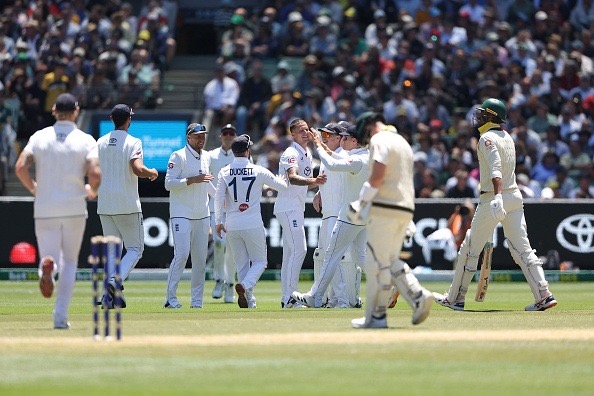
As some of the biggest names in the sport criticized the Melbourne Cricket Ground surface, Cricket Australia chief Todd Greenberg stated on Saturday that short Tests were detrimental to business.
On the first day of the fourth Test match between Australia and England on Friday, 20 wickets fell, with the visitors being knocked for just 110 and the hosts for 152.
Australia were then bundled out for 132 on the second day, leaving England 175 to chase to pull one Test back.
After 19 wickets were taken on the first day of the series opener in Perth, it was the most wickets to fall on the first day of an Ashes Test since 1909.
Cricket Australia lost millions of dollars in revenue when the Perth Test finished in two days, and Melbourne also had a significant negative impact on the organization’s finances.
“I didn’t sleep well last night, put it that way,” Greenberg said on SEN radio after more than 94,000 packed into the MCG for Friday’s first day.
“It was an amazing day of Test cricket, so for that record number of people who were here, boy, they’ve had an experience. But our challenge is to make sure we can continue those experiences day after day. That’s the challenge for all of us.”
With ten millimeters of grass on the wicket, the Melbourne pitch was set up to give bowlers considerable movement and bounce in overcast conditions.
According to Greenberg, Cricket Australia would not benefit from a trend toward shorter Test matches.
“A simple phrase I’d use is short Tests are bad for business. I can’t be much more blunt than that,” he said.
“So I would like to see a slightly broader balance between the bat and the ball.”
The Melbourne pitch has drawn criticism from a number of former greats, including former England captain Michael Vaughan, who called it “a joke” on Saturday.
“This is selling the game short,” he added, while another ex-England skipper Alastair Cook branded it “an unfair contest”.
When it comes to pitch preparation, Australian curators have historically operated independently of both Cricket Australia and captains.
Greenberg proposed that a more interventionist strategy might be required.
“It’s hard not to get more involved when you see the impact on the sport, especially commercially, he said.
“I’m not suggesting I’ll go around talking to ground staff, but we do have to have a careful eye on what our expectations are over the course of a summer.”