
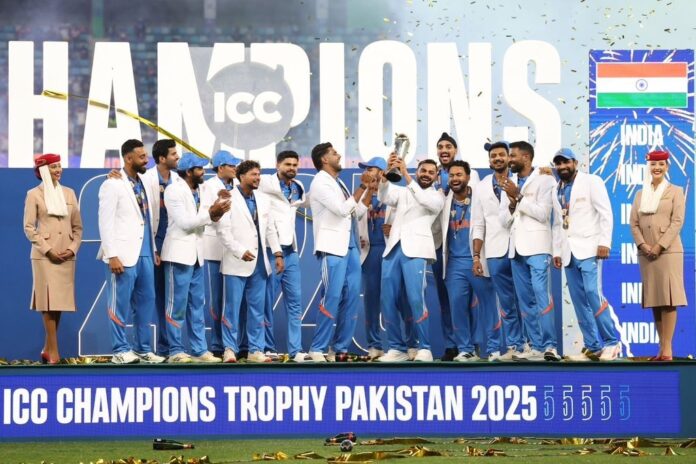
In a turbulent 2025, India dominated white-ball cricket while South Africa lost the title of “bridesmaids,” but geopolitics cast a shadow over the sport.
When the nuclear-armed neighbors got into a military confrontation in May that almost turned into a full-fledged war, the already strained relations between India and Pakistan reached a new low.
The confrontation caused disruptions in the Indian Premier League and in the ensuing 20-overs Asia Cup competition in the United Arab Emirates, India refused to accept the winner’s trophy from Asian Cricket Council (ACC) president Mohsin Naqvi, who also happens to be Pakistan’s interior minister.
During the politically sensitive competition, India defeated Pakistan three times and declined to shake hands with them at the toss or during the game. Both sides’ players made aggressive gestures that prompted the International Cricket Council (ICC), which is in charge, to impose punishments.
India’s undefeated run in the 50-overs competition culminated in the Rohit Sharma-team winning the Champions Trophy earlier in March. India played all of their games in Dubai, which many considered as an advantage, even though it was the first ICC event to be held in Pakistan in almost thirty years.
Similarly, when India hosted the 50-overs Women’s World Cup, Pakistan played all of their games in Sri Lanka.
India’s agonizing wait for their first Women’s World Cup triumph was ended by Harmanpreet Kaur and her teammates after the October 30 semi-final in Navi Mumbai saw Jemimah Rodrigues scoring an incredible century to upset Australia, the reigning champions.
By defeating Australia in the World Test Championship (WTC) final at Lord’s, South Africa also put an end to decades of suffering.
Temba Bavuma and his side had no baggage from the past, despite being mocked for their propensity to falter in ICC tournament knockout stages. Their five-wicket triumph was won by opener Aiden Markram’s century in the fourth innings, breaking a long-standing curse.
With a 2-0 sweep, South Africa went on to win their first Test series in India in 25 years, demonstrating that their WTC success was by no means a fluke.
After mainstays Virat Kohli and Rohit Sharma quit the format earlier this year, India appears to be going through a difficult transition after failing to duplicate their white-ball dominance in Test cricket.
In the case of England, ideology rather than persons was the problem. Their Ashes campaign was in chaos when their high-risk “Bazball” strategy, which was based on daring batting, failed to produce results in Perth and Brisbane.