Shubman Gill may be debating whether to be or not to be as he switches between formats. He changed his style from an unconventional to a more traditional one, but it isn’t quite producing the results he may have hoped for in T20 Internationals.
With an incredible 754 runs in his first series as Test skipper against England, Gill put on a coming-of-age display, but he hasn’t quite been able to replicate that success in the shortest format.
Not to mention, he was essentially pitchforked into the position in lieu of a settled Sanju Samson, who had scored three hundreds for his country the year before.
However, Gill’s appointment as vice-captain has scarcely been shocking given the larger picture of all-format captaincy and Indian cricket’s desire for its next big star after Virat Kohli and Rohit Sharma.
It is challenging to compartmentalize technical adjustments as he moves from Tests to T20Is and back, even though the transition seems less demanding in the ODI format, because of his busy schedule that allows for very little downtime and his mindset as a 26-year-old who wants to be constantly involved.
Compared to his opening partner Abhishek Sharma, who has had a terrific season thus far, Gill’s T20I returns in 2025 have been modest.
Gill has scored 263 runs off 183 balls at a strike rate of 143 or higher in the 13 Twenty20 Internationals he has participated in this year. He has only hit four sixes, two of which came during the Powerplay.
In contrast, Abhishek scored 773 runs from 397 balls at a strike rate of 188.5 in 18 games in 2025, including 48 sixes, or over three per game on average.
Gill’s strategy does not yet entirely conform to Team India’s “attack-at-all-costs” T20 blueprint, which is frequently presented as freedom of expression in cricket jargon.
“When Gill burst onto the international scene in 2019 till the last Border-Gavaskar Trophy, if one revisits most of his flamboyant knocks in white-ball cricket, one is likely to witness that his bat is angled towards third slip or gull from where it is coming down and meeting the ball,” a PTI report quoted a former India player, who is also a Level 3 coach, as saying.
“A stance like that always helps to play shots square off the wicket, especially the horizontal bat shot like pull and Gill is as good a puller as one would find in world cricket,” he said.
But the drawback of that specific stance, especially in Test cricket, is that incoming deliveries frequently find his pads or get past his defense and strike the stumps.
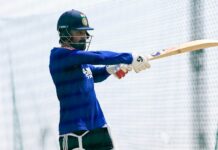
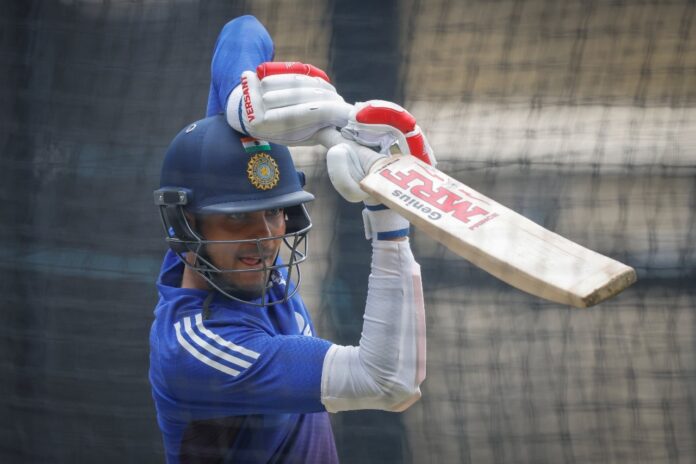
Gill is an incredibly diligent cricket player who improved his technique prior to the England series, playing closer to his body with a straighter bat movement as opposed to earlier when the bat came down from the third-slip or gully region.
“Playing straight is a virtue that always pays dividends in Test cricket as a straight bat-path enables you to play inside the ‘V’. So the scoring shots will include the straight shots, cover drives, off drives and on-drives. But with that stance, you cannot easily play the pull-shot or the slashes over point. It is not impossible but difficult as then your body alignment also changes.”
Fast bowlers who clock more than 135 clicks would have their natural length somewhat moved back at about 8 meters (back of the length) in T20s, even during Powerplays. Gill may need to switch back to horizontal bat shots for that amount of bowling during Powerplay, and this format-to-format technique change is more of a mental game.
Gautam Gambhir would like one of his batting constants to regain his T20 hitting rhythm with just nine games remaining before the T20 World Cup begins.