
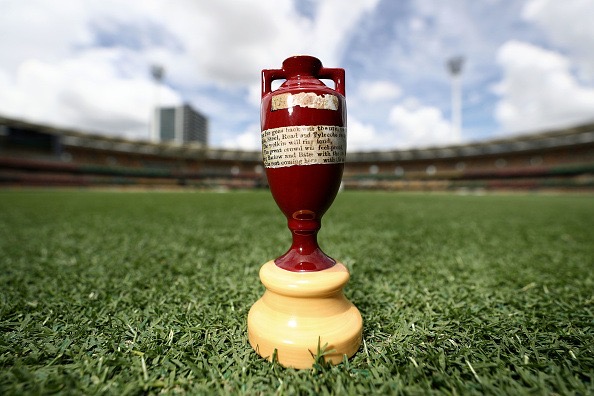
Cricket will take a break next week to enjoy its most enduring rivalry as Australia and England compete in the Ashes, while Twenty20’s worldwide carve-up continues to hold the sport captive. Even though the five-day format seems to be on life support in some countries, the bilateral series has been the lifeblood of Test cricket for more than 140 years.
In the age of smartphones and social media, people’s attention spans have decreased, making long-form cricket with its lunch and tea intervals seem somewhat out of date. However, the Ashes, a vast, five-Test grudge match rich in custom, myth, and cultural identity, continues to captivate generations of fans.
When the series begins on November 21, Perth Stadium will be packed, and hundreds of British fans will travel across Australia to attend every game until the New Year. In his capacity as a broadcaster, England great Ian Botham—whose Ashes exploits are legendary in cricket—will be one of many former players who experience nostalgia.
“Historically, everyone in the cricketing world watches the Ashes,” Botham said near the 100,000-seat Melbourne Cricket Ground, venue of the fourth Test.
“It’s tradition, it’s the competition. You know that it’s all flat out. The Ashes is a very healthy place to be if you want to play cricket because you will fill houses.”
There are intense rivalries in most sports, some of which go back more than a century. However, nothing compares to the Ashes’ regularity and stability in international competitions.
Regardless of who wins the series, none can equal its founding narrative or the enigmatic allure of the small terracotta trophy that is kept hidden at Lord’s, the game’s spiritual home in London.
A faux obituary in a British newspaper lamenting the demise of English cricket after a defeat to an Australian touring team in 1882 is where the series’ name originated.
“The body will be cremated and the ashes taken to Australia,” it lamented.
A few months later, England’s captain Ivo Bligh delivered on his promise to “recover those ashes” by leading the team to a 2-1 series victory in the Australian colonies.
Although there are conflicting versions regarding the origin of the ceramic urn, most concur that Australian society ladies gave it to Bligh as a lighthearted award after the series victory.
The Ashes have been fiercely disputed every two years or so, with Australia winning 34 series, England 32, and seven draws, despite the urn being offered in jest.
The drama, which is based on class conflicts between an imperialist state and its colonial upstarts during the Victorian era, is frequently intense and controversial.
The English cricket players of the 19th century who could afford to travel by long boat to the Australian colonies were almost always “gentlemen”. The hosts can be anything but.
Australians loved their cricket then as they do now, with gambling adding fuel to an aggressive, win-at-all-costs ethos established in domestic fights between competing colonies. Teams touring England would encounter hostile media and boisterous crowds full of gamblers, chancers, and the kids of transported prisoners who were eager to see them fail. And so it goes on.
Ben Stokes was called a “Cocky captain complainer” and star batsman Joe Root a “pretender” for failing to score a century in three Australian series. The current England team was met with brutal headlines in Perth.
Although England hasn’t won a Test in Australia in almost 15 years and lost the urn in 2017–18, ticket sales have never been negatively impacted by either team’s dominance.
The host board is thrilled with the pent-up demand since COVID regulations hindered the previous series in Australia.
While purists are captivated by the sport, casual viewers are aroused by the theater. Players’ performances under intense pressure can make or ruin their careers, and media scrutiny is unrelenting.
For unsporting actions that transgress the “spirit of cricket,” a nebulous notion of fair play that, perplexingly, lies above the rules, heroes are exalted and villains penalized.
When Jonny Bairstow wandered out of his crease at the end of an over, Australian wicketkeeper Alex Carey threw down his stumps, making him the villain of the previous series in England. Although the dismissal was lawful, many people, including British Prime Minister Rishi Sunak at the time, thought it was terrible form.
As the Australians made their way back to their dressing room via the “Long Room” at Lord’s, the elite of the British establishment heckled them, and throughout the remainder of the series, Carey was harassed by spectators.