
There was a lot of off-field turmoil during the recently finished Asia Cup. But even in the midst of the chaos, there were tears of failure, new stars, and flashes of brilliance.
Although Sri Lanka forced India to the Super Over in a meaningless Super 4s match and the final match against Pakistan lasted into the tournament’s final over, the team did not lose in seven games in this edition.
With the exception of three games against India, Pakistan won all of their matches. However, defending champions Sri Lanka disappointed with their defeats to Bangladesh and Pakistan. Afghanistan failed to qualify for the Super 4s, not living up to the hype.
In addition to being India’s ninth consecutive victory over Pakistan while chasing in T20Is, this was their ninth Asia Cup victory (ODI and T20I formats included).
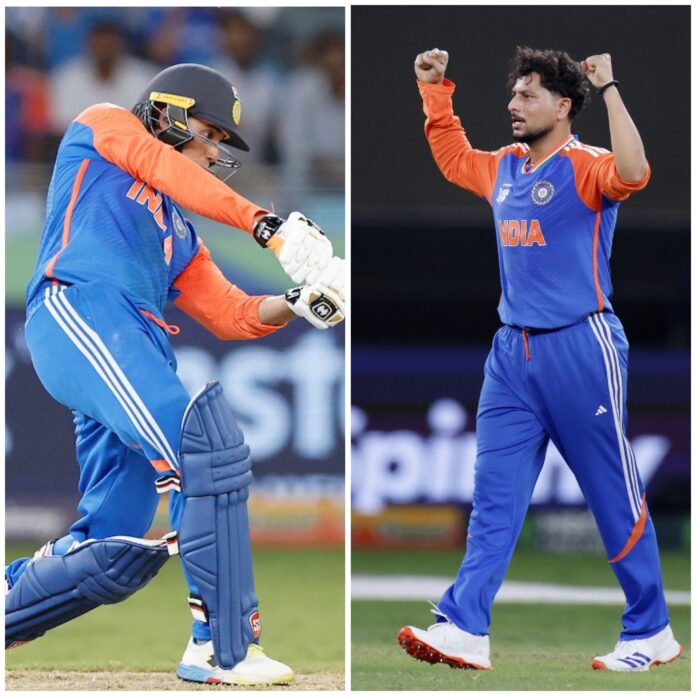
Abhishek Sharma justified his position as the world’s top batsman in Twenty20 Internationals with 314 runs from seven games, including three half-centuries and a best score of 75. His strike-rate was an incredible 200.00, and his average was 44.85.
India captain Suryakumar Yadav endured a lean tournament, managing just 72 runs in seven innings with a best of an unbeaten 47 while his deputy Shubman Gill also struggled for consistency, scoring 127 runs from seven outings with the same top score of 47.
In contrast, Tilak Varma stood out as one of India’s brightest performers, amassing 213 runs in seven matches. He saved his best for the final against Pakistan, producing a match-winning 69* — his highest score of the tournament.
All-rounder Hardik Pandya, who missed the final because of an injury, had a mediocre tournament, scoring 48 runs in six games and taking four wickets for 120 runs at an economy rate of 8.57.
In the Super 4s match against India, he was pulled up for his gun-firing celebration, but opener Sahibzada Farhan was Pakistan’s leading batsman with 217 runs in seven games, including two half-centuries and a high score of 58.
Another notable batsman for Pakistan was Fakhar Zaman, who amassed 181 runs from seven games, including a top score of 50.
Sri Lankan batsman Pathum Nissanka scored the tournament’s only century when he hammered 107 against India in the Super 4s, but his team lost in the Super Over. With the exception of Kusal Perera, who amassed 146 from six games, the most of his batting teammates struggled in the tournament.
Pakistan captain Salman Agha and Suryakumar, the captain of India, both had a remarkably comparable tournament run total of 72. Despite being a good off-spinner, Agha nevertheless under-bowled himself, taking only one wicket in two overs.
Saif Hassan was the top batsman for Bangladesh, the fourth team in the Super 4s, scoring 178 runs in four games, with 69 being his highest score.
With 17 wickets from seven games, India’s Kuldeep Yadav was far ahead of other bowlers and ten wickets clear of his nearest rival, Shaheen Shah Afridi (10 wickets from seven games). The economy rate was a pitiful 6.27 with best bowling figures of 4/7.
Kuldeep broke the previous record of 33 established by former Sri Lankan pacer Lasith Malinga by increasing his Asia Cup wicket total (across ODI and T20I forms) to 36.
India pace spearhead Jasprit Bumrah performed admirably, taking seven wickets for 135 runs in five games at an economy rate of 7.43.
UAE’s Junaid Siddique emerged as one of the surprise packages of the tournament, claiming nine wickets in just three group-stage games. His 4/18 against Pakistan, though not enough to secure victory, ranked among the standout bowling performances of the competition.
Afghanistan star Rashid Khan disappointed with just three wickets in as many games as his team was eliminated in the group stage.