
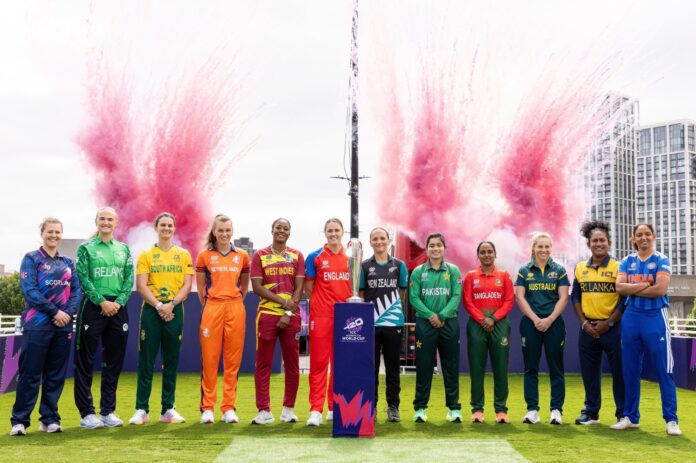
The ICC T20 Women’s World Cup, which is bigger and more competitive than ever, kicks off in Birmingham on Friday. Australia’s long-standing dominance in the competition is anticipated to be challenged by the ever-improving India, England, and South Africa.
It is no longer a yawn-inducing formality, but the Australians, who have won six of the last nine championships, will be keen to unseat the current winners, New Zealand, for a seventh victory. In addition to the powerful Kiwis, India won their first world championship in the 50-over World Cup last year.
South Africa, who have advanced to the finals of the last three ICC events, and England, who are as good as ever at home, would also be formidable opponents. In that regard, this version of the showcase, which starts with a match between Sri Lanka and England today, is the most open it has ever been. It is also the first World Cup held in the United Kingdom since its inaugural edition in 2009.
With the addition of Ireland and the Netherlands in 2024, the event is also the largest in terms of participants (12). The creation of a level playing field and the emergence of some raw but intriguing talent are even more pleasing than the expansion itself, which is a sign of the women’s game gaining a firmer presence across nations.
Alice Capsey, Tilly Corteen-Coleman, and Freya Kemp of England will start, while Sri Lanka, their opponents on Friday, will feature players like Vishmi Gunarathne, Imesha Dulani, Kavisha Dilhari, and Kawya Kavindi.
Amelia Kerr, the captain of New Zealand, is a vital member of her team and, at 25, one of the youngest leaders on the international scene. After overcoming despair and suicidal thoughts throughout the 2020–21 season, she is also a wonderful tale of resiliency.
Promising N Sree Charani, Yastika Bhatia, and Nandani Sharma are among India’s strong competitors.
The Australians have two outstanding young players in their ranks, left-arm seamer Lucy Hamilton and batter Georgia Voll, but they still rely on their veterans to win the championship. Despite bringing back veteran pacer Shabnim Ismail and Dan van Niekerk from retirement, the Proteas, led by the unbeatable Laura Wolvaardt, have Kayla Reyneke and Annerie Dercksen spearheading the march of Next-Gen players.
These relatively new names will be closely followed as they take on the accomplishments of a stellar group of players who are nearing the end of their brilliant careers.
Australia still has the aura of the past, and the Antipodeans are still the team to beat even though they haven’t won an ICC crown since 2017. The main reason for this is that their campaign is being led by a large number of battle-hardened individuals. Every aspect of the white ball game is known to players like Beth Mooney, Tahila McGrath, Ellyse Perry, Ashleigh Gardner, Kim Garth, Annabel Sutherland, and Megan Schutt.
The players, including Gardner, may not have agreed that Sophie Molineux should be captain, but they must put the past behind them and cooperate to achieve a bigger objective. It’s not exclusive to Australians.
India, a more formidable and reliable white ball team, will be their greatest obstacle. The Harmanpreet Kaur-led team would be eager to follow Australia’s lead and become the second team to simultaneously host the T20 and 50-over World Cups. They have a genuine chance of winning another global championship in less than seven months thanks to pacers like Renuka Singh and Kranti Goud, seasoned all-rounders like Deepti Sharma, and a potent batting lineup. The Indian team may have felt less anxious after winning the ODI World Cup with much the same team.
Other teams, such as the West Indies, Ireland, and Sri Lanka, may be motivated to face the favorites fearlessly because they are not burdened with expectations.
This tournament’s enhanced openness will also be ideal for an underdog planning an incredible run. Then, be ready for a wonderful July 5th at the legendary Lord’s.